Extra Payments in Spain: Differences Between 12 and 14 Payments (2026)
12 vs 14 payments: differences, how it affects your monthly payslip, income tax and which is better. Real examples and comparisons. Discover your case!
💡 Want to know exactly how much you would earn with 12 or 14 payments?
👉 Net salary calculator: choose 12 or 14 payments
What are extra payments?
In Spain, many contracts include 14 annual payments:
- 12 regular payments (one per month)
- 2 extra payments (usually in summer and Christmas)
The alternative is 12 prorated payments, where extra payments are spread throughout the year and received within each monthly payslip.
👉 Important:
The annual gross salary is the same.
The only thing that changes is how the money is distributed throughout the year.
12 payments vs 14 payments: key difference
- 14 payments → you receive less each month, but get two extra payments per year
- 12 payments → you receive more each month, without extra payments
Annual net salary is usually very similar. The difference is in monthly liquidity.
How payments affect income tax and payslip
Income Tax (IRPF)
Income tax is calculated on the annual total, not on each individual payslip.
This means:
- Extra payments also pay tax
- In months with double payments, withholding may seem higher
- At year end, total income tax is similar with 12 or 14 payments
What is income tax and how it's calculated
Social Security
Social Security contributions also apply to gross salary, including extra payments.
The worker contributes approximately 6.5% of annual gross salary (including MEI 2026), regardless of the number of payments.
Practical example: 12 payments vs 14 payments
Let's assume an annual gross salary of €28,000, for a person:
- Under 65 years old
- Without children
- Without disability
- Madrid region
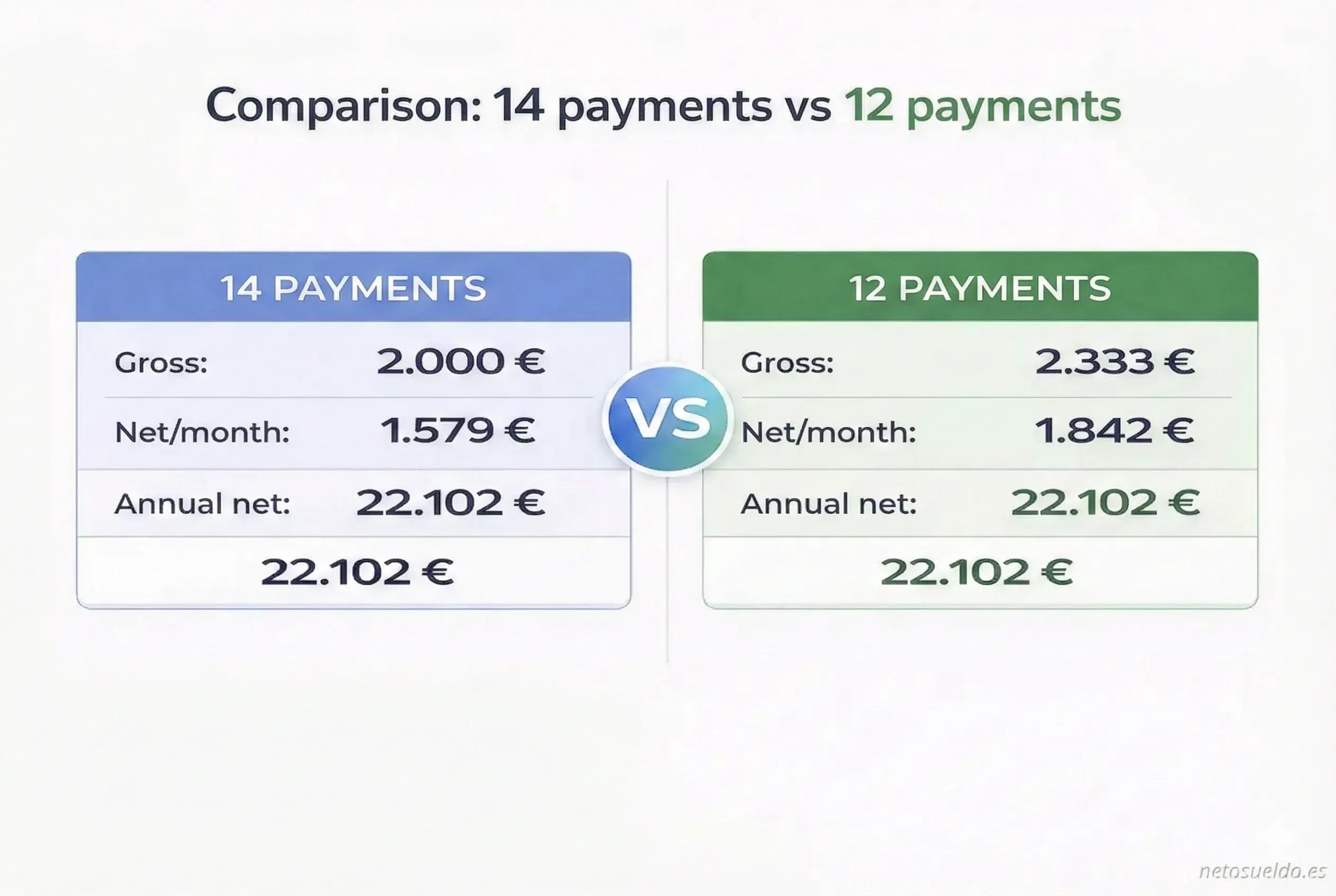
With 14 payments
- Regular monthly gross: ~€2,000
- Regular monthly net: ~€1,579/month
- Extra payments (June and December): ~€1,579 each
- Total annual net: ~€22,102
With 12 prorated payments
- Monthly gross: ~€2,333 (€28,000 / 12)
- Monthly net: ~€1,842/month
- No extra payments
- Total annual net: ~€22,102
👉 Annual net is exactly the same.
👉 Only how and when you receive the money changes.
💼 Compare your case: 12 vs 14 payments
Calculate your monthly net with each option:
👉 With €28,000 gross | With €35,000 | With €40,000
Which option is better: 12 or 14 payments?
It depends on your preferences and how you manage money.
Advantages of 14 payments
- Two extra payments for holidays or Christmas
- Feeling of "bonus payment"
- Traditional in many collective agreements
Advantages of 12 payments
- Higher stable monthly income
- Better for monthly budgets
- Avoids withholding "spikes" in months with extras
There is no generally better option fiscally.
Other factors that influence net salary
Autonomous community
Regional income tax can mean that, with the same gross salary, you receive more or less net depending on the community. Madrid usually withholds less than Catalonia or Andalusia.
Calculator by autonomous communities
Personal situation
Having children, being over 65 or having a disability reduces income tax through personal and family minimums. This increases your net salary, with both 12 and 14 payments.
Calculate your net salary with 12 or 14 payments
If you want to see exactly how much you would receive in each case, based on your salary and community:
👉 Net salary calculator: 12 vs 14 payments
⚠️ This calculation is for guidance only and does not replace an actual payslip or professional tax advice.
Related guides
Understand your payslip
- How to calculate your net salary: complete guide
- Gross vs net salary: differences explained
- Understanding income tax: how it affects your payments
Examples by salary
- Net salary with €25,000: 12 vs 14 payments
- Net salary with €30,000: differences by payments
- Net salary with €40,000: complete comparison
By community
Frequently asked questions
Solve the most common questions about this topic
Calculate your net salary now
Get your personalized result in less than 1 minute